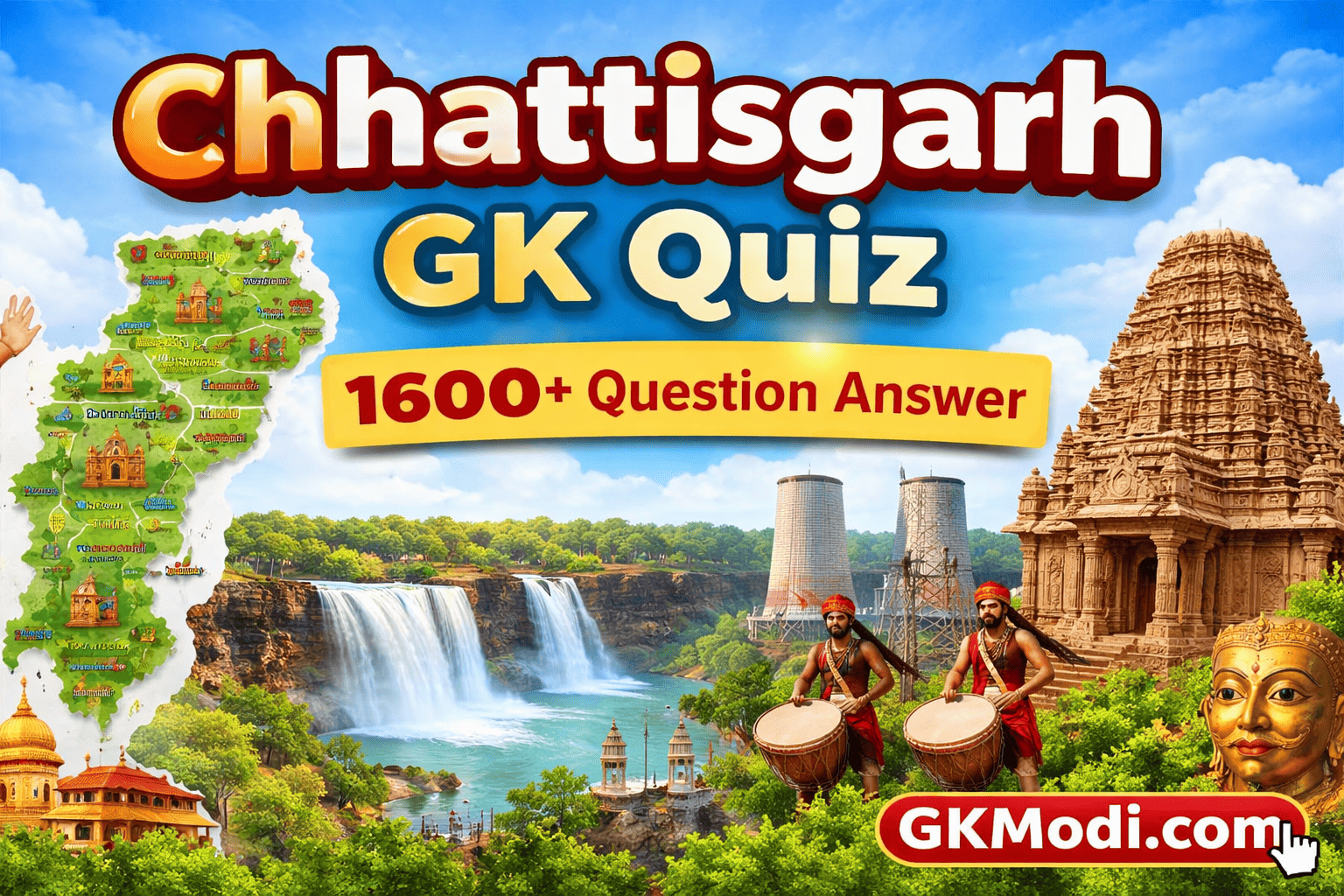
Chhattisgarh GK Quiz – 20 Important Facts, History & Complete Guide (www.gkmodi.com)
Chhattisgarh GK Quiz is one of the most searched topics for competitive exams like CGPSC, CG Vyapam, SSC, Railway, Banking, and other state-level examinations. If you want to score high in Chhattisgarh General Knowledge (CG GK), understanding the state’s history, geography, economy, culture, and current affairs is essential.
In this detailed SEO-friendly article for www.gkmodi.com, we present 20 must-know facts about Chhattisgarh that are frequently asked in GK quizzes and competitive exams.
1. Formation of ChhattisgarhChhattisgarh was officially established on 1 November 2000 under the Madhya Pradesh Reorganisation Act. The demand for a separate state was based on cultural identity and administrative efficiency.
2. Capital and Major CitiesThe capital of Chhattisgarh is Raipur. Other important cities include Bilaspur, Durg, Korba, and Jagdalpur. Raipur is the administrative and industrial hub of the state.
3. Why is Chhattisgarh Called the “Rice Bowl of India”?The state produces large quantities of rice due to fertile plains and favorable climate. Paddy cultivation dominates the agricultural sector.
4. Geographic LocationChhattisgarh is a landlocked state located in central India. It shares borders with Odisha, Maharashtra, Telangana, Andhra Pradesh, Madhya Pradesh, Jharkhand, and Uttar Pradesh.
5. Major RiversImportant rivers include the Mahanadi River, Indravati, Hasdeo, and Shivnath. The Mahanadi River originates in Chhattisgarh.
6. Natural ResourcesChhattisgarh is rich in minerals such as iron ore, coal, limestone, bauxite, and dolomite. It plays a major role in India’s steel and power production.
7. Industrial HubThe city of Bhilai is famous for the Bhilai Steel Plant, one of India’s largest steel plants. The state is also strong in cement and electricity production.
8. Tribal PopulationChhattisgarh has a large tribal population including Gond, Baiga, Halba, and Muria communities. Tribal culture plays a vital role in state identity.
9. Famous WaterfallThe breathtaking Chitrakote Falls, often called the “Niagara Falls of India,” is located in Bastar district.
10. Forest CoverNearly 44% of the state’s area is covered by forests, making it one of the greenest states in India.
11. National Parks and WildlifeImportant wildlife reserves include Indravati National Park and Kanger Valley National Park, known for biodiversity and endangered species.
12. Official LanguageThe official language is Hindi, but Chhattisgarhi is widely spoken among locals.
13. State SymbolsState Animal: Wild Buffalo | State Bird: Hill Myna | State Tree: Sal | State Flower: Rhynchostylis gigantea
14. Districts and Administrative StructureChhattisgarh has 30+ districts, divided into multiple divisions for administrative convenience.
15. EconomyThe economy depends on agriculture, mining, steel production, and power generation. It contributes significantly to India’s electricity supply.
16. Education and UniversitiesGuru Ghasidas Central University in Bilaspur is one of the major higher education institutions.
17. Bastar RegionThe Bastar region is famous for tribal art, handicrafts, Dussehra festival, and unique cultural heritage.
18. Historical BackgroundHistorically, the region was ruled by various dynasties including the Mauryas and Kalachuris before British rule.
19. FestivalsImportant festivals include Bastar Dussehra, Hareli, Pola, and Teeja.
20. Competitive Exam ImportanceQuestions related to formation date, capital, rivers, mineral resources, tribal culture, and industries are frequently asked in CGPSC, CG Police, Forest Guard, and other exams.
Conclusion
Chhattisgarh is a state rich in culture, agriculture, minerals, forests, and industrial power. For aspirants preparing for government exams, mastering Chhattisgarh GK Quiz topics is essential for scoring high marks.
If you want 1600+ Chhattisgarh GK Questions with Answers, visit:
👉 www.gkmodi.com