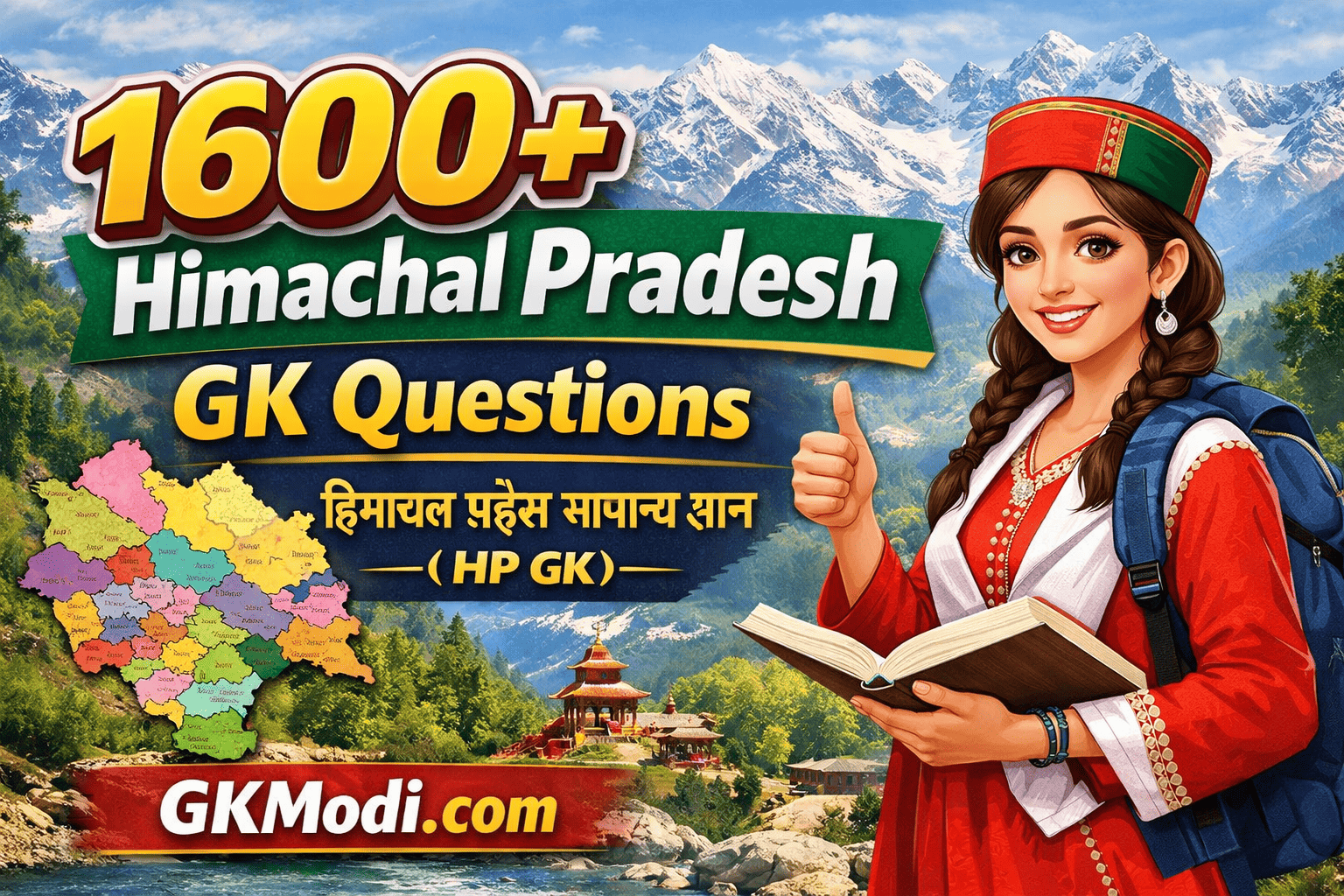
Himachal Pradesh GK Quiz: Complete General Knowledge Guide
Himachal Pradesh, known as "Dev Bhumi" (Land of Gods), is one of the most picturesque states in India, located in the western Himalayas of northern India. Formed on January 25, 1971, with Shimla as its capital, the state is famous for its mountainous terrain, scenic valleys, rivers, and spiritual centers. Himachal Pradesh is a hub for tourism, agriculture, and hydropower, boasting a population of approximately 7.5 million and a high literacy rate of 83.8%.
If you are preparing for competitive exams or love Indian geography quizzes, this Himachal GK Quiz is the perfect resource. Explore facts, history, culture, and geography of Himachal Pradesh in detail.
Key Details About Himachal Pradesh
- Capital: Shimla
- Largest City: Shimla
- Formation Day: January 25, 1971
- Area: 55,673 km²
- Population: ~7.5 million
- Official Language: Hindi
- State Animal: Snow Leopard
- State Bird: Western Tragopan
- State Flower: Pink Rhododendron
- State Tree: Deodar Cedar
- Major Rivers: Beas, Sutlej, Ravi, Chenab, Yamuna
- Tourist Spots: Manali, Shimla, Dharamshala, Kullu, Spiti Valley
Geography of Himachal Pradesh
Himachal Pradesh is bordered by Jammu & Kashmir to the north, Punjab to the west, Haryana to the southwest, Uttarakhand to the southeast, and Tibet (China) to the east. The state features high mountains, deep valleys, and dense forests, making it a biodiversity hotspot. The Himalayan ranges, including the Dhauladhar and Pir Panjal, dominate the region, providing excellent conditions for hydroelectric projects and adventure tourism.
- The state lies mostly in the Himalayan region.
- Major rivers originate from glaciers in the region.
- Climate varies from subtropical in lower valleys to alpine in higher regions.
Economy of Himachal Pradesh
Tourism: Himachal is famous for hill stations, trekking routes, and pilgrimage sites. Shimla, Manali, Dharamshala, and Dalhousie attract millions of tourists annually.
Agriculture: Apple orchards, maize, wheat, and barley are primary crops. The state is also known for horticulture and floriculture.
Hydropower: With rivers like Beas, Sutlej, and Ravi, Himachal has numerous hydroelectric projects supplying energy to India.
Handicrafts: The state produces woolen clothes, carpets, wooden artifacts, and Kullu shawls, which are popular both domestically and internationally.
Himachal GK Tip: Himachal is often called the "Fruit Bowl of India" due to its extensive apple production.
Culture and Festivals
Languages: Hindi is official, but Pahari dialects, Punjabi, and Tibetan are also widely spoken.
Traditional Dance: Nati dance is a traditional folk dance of Himachal Pradesh.
Music: Folk songs often accompany festivals and celebrations.
Festivals: Dussehra in Kullu (famous for vibrant processions and rituals), Mata Shakti Fair (celebrated in villages for local deities), Lohri and Diwali observed with regional variations.
Himachal GK Insight: The state is home to Himalayan Buddhist monasteries, especially in Dharamshala and Spiti Valley.
Education and Literacy
Himachal Pradesh is one of India’s most literate states, with an 83.8% literacy rate. Key educational highlights: Himachal Pradesh University (Shimla), IIT Mandi, NIT Hamirpur. Schools: Kendriya Vidyalayas, private and government schools promote high literacy. Focus on Women Education: Himachal Pradesh has one of the highest female literacy rates in North India. GK Fact: Literacy plays a key role in the state’s socio-economic development.
Tourism in Himachal Pradesh
Shimla: Famous for The Ridge, Mall Road, Jakhoo Temple.
Manali: Known for Rohtang Pass, Solang Valley, and adventure sports.
Dharamshala: Home to Dalai Lama Temple Complex and Tibetan culture.
Kullu: Renowned for Kullu Dussehra and river rafting.
Spiti Valley: Offers trekking, monasteries, and cold desert landscapes.
Himachal GK Tip: Himachal is often called the "Land of Valleys" due to its numerous scenic valleys like Kullu, Kangra, and Parvati.
Flora and Fauna
Forests: Coniferous forests with pine, cedar, and oak.
Wildlife: Snow leopards, Himalayan tahr, musk deer, Himalayan monal (state bird).
Protected Areas: Great Himalayan National Park, Pin Valley National Park, and Renuka Wildlife Sanctuary.
GK Fact: The Great Himalayan National Park is a UNESCO World Heritage Site.
Himachal Pradesh History
Ancient Era: Part of Mahabharata kingdoms.
Medieval Era: Ruled by Kangra, Chamba, and Kullu kingdoms.
British Era: Hill states were brought under British control; Shimla became summer capital of British India.
Post-Independence: Formed as a full-fledged state in 1971.
Himachal GK Tip: Many historical forts and temples remain as heritage sites.
Himachal Pradesh Current Affairs (2026)
Political Leadership: The state government is led by Chief Minister Sukhvinder Singh Sukhu (INC).
Hydropower Projects: New projects in Kullu and Lahaul regions are ongoing.
Tourism Initiatives: Eco-tourism projects in Spiti and Kinnaur to promote sustainable tourism.
Infrastructure Development: Expansion of Shimla Airport and Kangra Airport for better connectivity.
GK Fact: Himachal often ranks high in ease of living and environmental conservation indices.
Himachal Pradesh Trivia (GK Quiz Facts)
- State Motto: “Satyameva Jayate” (Truth Alone Triumphs)
- Highest Peak: Reo Purgyil (6,816 m)
- Famous Rivers: Beas, Sutlej, Ravi
- Major Industries: Tourism, Hydropower, Agriculture
- Popular Adventure Sports: Paragliding, Skiing, River Rafting, Trekking
- Himachal Famous Cuisine: Dham, Sidu, Babru, Chha Gosht
- Notable Monasteries: Tabo, Key, Dhankar in Spiti Valley
- Himachal Wildlife: Snow Leopard, Himalayan Monal, Himalayan Black Bear
Himachal GK Tip: Knowing these trivia points is useful for exams like UPSC, SSC, State PSC, and Railway exams.
Himachal Pradesh Tourism Facts for GK
Rohtang Pass: Famous for snowfall and adventure activities.
Manikaran Sahib: Popular pilgrimage site for Sikhs and Hindus.
Solang Valley: Known for paragliding, skiing, and zorbing.
Chail: Houses the highest cricket ground in the world.
Kinnaur: Known for apples and scenic landscapes.
GK Tip: Himachal tourism contributes significantly to the state GDP.
Why Himachal Pradesh is Called “Dev Bhumi”?
Himachal Pradesh is known as “Dev Bhumi” because of: numerous ancient temples and monasteries; sacred rivers like Beas, Sutlej, and Ravi; spiritual centers like Dharamshala and Kullu; ancient myths and legends linked to Mahabharata and Ramayana. Himachal GK Insight: The term “Dev Bhumi” highlights the spiritual and cultural richness of the state.
Useful Resources
For more Himachal Pradesh GK Questions, visit www.gkmodi.com. Download Himachal Quiz PDFs and practice online. Check Himachal Tourism updates and official government resources for the latest facts.
Himachal Pradesh GK Summary
Himachal Pradesh is a blend of natural beauty, cultural heritage, and modern development. From majestic mountains to vibrant festivals, the state offers endless opportunities for education, tourism, and adventure. Its high literacy rate, eco-tourism initiatives, and sustainable hydropower projects make it a model state in North India. Whether you are preparing for competitive exams, planning to visit the state, or simply exploring Indian geography, knowing Himachal’s history, culture, economy, and natural diversity is essential.
Remember: Practicing Himachal GK quizzes can help you score better in exams and enhance general knowledge. For more quizzes, visit www.gkmodi.com and explore hundreds of fresh, exam-oriented questions.